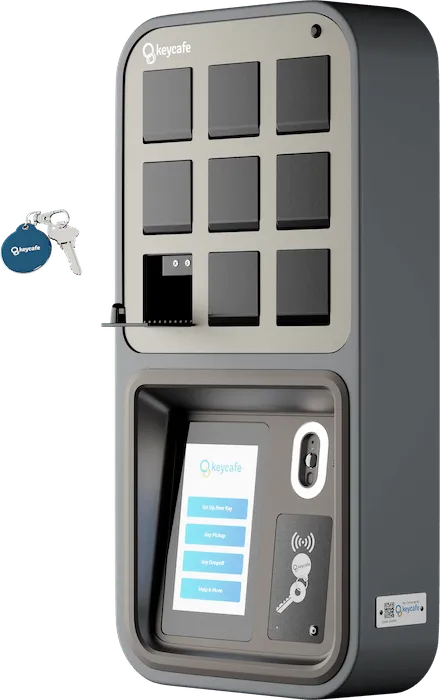
In the dynamic world of hospitality, security isn't just an option; it's the bedrock of guest satisfaction and operational efficiency. Beyond visible surveillance, key management is an equally critical, though frequently underestimated, security pillar. For years, hotels relied on basic, manual key control. But as threats evolve and guest expectations rise, these traditional methods are proving inadequate. This marks a pivotal shift: the transition to intelligent, automated key management systems. This article explores why this revolution is essential for modern hotels aiming for heightened safety and seamless operations.
The Limitations of Traditional Key Management
Historically, managing keys in hotels was a straightforward, hands-on task. Keys often hung on simple pegboards or sat in basic cabinets, with staff manually logging them in and out using paper books. Master keys might reside in a supervisor’s office or a less secure central spot. While seemingly low-cost initially, this manual approach comes with inherent vulnerabilities and inefficiencies that no longer fit today's complex security needs.
One major flaw is the lack of granular access control. Once a key cabinet is open, anyone nearby could potentially grab any key. There’s no precise way to limit who takes which key or when. This broad accessibility creates a significant security gap, making it tough to prevent internal misuse or opportunistic theft.
Relying on manual record-keeping is another big weakness. Paper logbooks are prone to human error and easily bypassed. Busy staff might forget to sign out a key accurately or miss recording exact times. Keys might also be informally passed between colleagues without updating the log, creating gaps in accountability.
Traditional systems also suffer from delayed issue detection. If a key goes missing, it might not be noticed for hours or even days until it's needed again. This extended window of vulnerability allows plenty of time for a missing key to be misused, potentially compromising guest rooms or valuable assets.
Finally, manual key management often leads to significant inefficiency and staff queuing. At the start or end of shifts, large hotels can see dozens of employees lining up just to pick up or drop off keys. This wastes valuable minutes per employee daily, accumulating into substantial lost productivity across the entire operation. This isn't just about money; it also frustrates staff and delays guest services, indirectly harming the guest experience.
In short, while traditional key management is initially simple, its fundamental flaws in access control, accountability, monitoring, and efficiency make it inadequate for modern hotels' security demands.
The Rise of Smart Key Management Systems
Recognizing these critical shortcomings, the hospitality industry is rapidly embracing smart, electronic key management systems (EKMS). These advanced solutions combine secure hardware with intelligent software to automate, monitor, and precisely control every aspect of key access, transforming hotel security from a burden into a strategic advantage.
An EKMS typically features intelligent key storage units (like electronic key cabinets or smart pegboards), robust user authentication (PINs, access cards, or biometrics), and centralized management software that meticulously logs all key activities and allows for remote oversight. This automated framework brings significant improvements over manual methods:
- Unmatched Access Control and Security: A core benefit of EKMS is its ability to enforce granular access control. Unlike open cabinets, an EKMS only releases a specific key to an authorized individual during a predetermined time. For example, a housekeeper's credentials might only grant access to master keys for their assigned floors and strictly during their shift.
- Automated and Immutable Audit Trails: The guesswork and inaccuracies of paper logs vanish with an EKMS. Every key transaction—who accessed it, which key, and the exact time of retrieval and return—is automatically recorded in a secure, digital database. This creates a tamper-proof audit trail accessible 24/7.
- Real-Time Monitoring and Proactive Alerts: Modern EKMS enables proactive security management. Systems can be configured to send instant alerts via email or SMS if a key isn't returned on time, an unauthorized access attempt occurs, or a high-security key is taken outside approved hours. This allows security and operations teams to address issues immediately, preventing minor oversights from becoming major security breaches.
- Significant Efficiency and Productivity Boost: Smart key systems dramatically streamline daily hotel operations. Automated key issuance and return eliminate staff queuing. Employees retrieve keys in seconds using a PIN or badge, freeing up front-desk and security staff for more critical, guest-facing tasks. A report from Acropolium highlights that approximately 93% of hoteliers report notable enhancements in efficiency after adopting technology, contributing to substantial increases in staff productivity and operational efficiency.
- Long-Term Cost Savings and Strong ROI: While an EKMS requires an initial investment, it offers substantial long-term cost savings and a compelling ROI. The most direct financial gain comes from drastically reducing lost keys and the associated rekeying expenses. A 2024 Lodging Magazine article notes that lost master keys alone can lead to rekeying costs in the thousands of dollars. By minimizing key losses, an EKMS helps hotels avoid these unpredictable and costly rekeying events. Preventing security breaches also provides significant indirect financial benefit.
Essential Features of a Modern Hotel Key Management System
Choosing the right EKMS is a strategic decision for any hotel, given its 24/7 operations, diverse staff, and unwavering focus on guest safety. For an EKMS to be truly effective, it must offer specific, robust functionalities:
- Secure and Intelligent Key Storage: The core of any EKMS is its tamper-resistant physical storage unit—be it a smart pegboard or locker-style cabinet. It must secure each key individually, releasing it only upon authorized user authentication. Unchecked-out keys remain physically locked, preventing unauthorized mass removal.
- Automated and Comprehensive Audit Trails: A non-negotiable feature is the system's ability to automatically log every key transaction in a secure, immutable digital database. This includes who took the key, which key, and the precise timestamp of removal and return. Comprehensive audit trails enable managers to easily generate detailed reports, invaluable for accountability, investigations, and policy compliance.
- Real-Time Alerts and Proactive Notifications: An effective EKMS moves beyond passive logging to provide proactive security monitoring. It should offer configurable alerts for critical events, such as overdue keys or unauthorized access attempts. These alerts, delivered via email or SMS, enable rapid response to potential security concerns.
- Scalability and Adaptable Capacity: Hotels vary greatly in size. The chosen EKMS must be inherently scalable to accommodate current needs and future growth. Modular systems, allowing for expansion by adding more key slots or cabinets, are ideal. For multi-property groups, the system should support centralized management, unifying key control across all locations.
- Remote Management and Cloud Connectivity: Modern hotel operations often demand remote oversight. A robust EKMS platform should offer remote access via secure cloud software or a dedicated mobile app. This enables managers to monitor key status, view logs, receive alerts, and even disable access for terminated employees from anywhere. Cloud connectivity also streamlines updates and integration.
- Seamless Integration with Other Hotel Systems: To maximize security and efficiency, the EKMS must integrate smoothly with other existing hotel systems. Common integrations include Property Management Systems (PMS), building access control, and video surveillance. These integrations create a cohesive, automated security ecosystem.
- User-Friendliness and Comprehensive Training Support: Given fast-paced operations and diverse staff, the EKMS must be intuitive and user-friendly, requiring minimal training. Features like clear touchscreens and on-screen prompts are crucial for quick adoption and consistent use.
- Emergency Access and Robust Fail-Safes: Hotels must be prepared for unforeseen circumstances like power outages. A reliable EKMS will incorporate fail-safe mechanisms such as battery backups or secure manual override options for critical key retrieval during emergencies. Clear protocols for emergency master keys for first responders are vital, including secure storage and rapid access methods.
The Tangible ROI: Measuring the Impact of Smart Key Management
For hotel owners and general managers, any significant investment must show a clear return. While the qualitative benefits of enhanced security and efficiency from an EKMS are evident, the quantitative Return on Investment (ROI) often provides the most compelling business case. A well-implemented EKMS can deliver substantial financial returns through direct cost savings and significant loss prevention.
- Direct Cost Reduction: Fewer Lost Keys and Rekeying Expenses: The most immediate and measurable financial benefit is the drastic reduction in costs from lost keys and subsequent rekeying. Estimates highlight that the typical cost for rekeying 100 locks can be around $4,000. By minimizing key losses, an EKMS helps hotels avoid these unpredictable costs, leading to a rapid payback period for the initial investment.
- Prevention of Security Incidents and Mitigation of Liabilities: While hard to quantify, the cost of a single serious security breach can be catastrophic. If poor key control leads to theft or unauthorized entry, the hotel could face substantial legal liabilities and irreparable brand damage. GoAudits emphasizes that minimizing unauthorized access with an EKMS significantly reduces the likelihood of such costly incidents.
- Extended Asset Protection and Reduced Shrinkage: A smart key system’s benefits extend to securing other valuable hotel assets. Hotels use these systems to control access to fleet vehicles, expensive equipment, or high-value inventory in locked areas like liquor storerooms. By preventing unauthorized use or removal, the hotel avoids costs from vehicle misuse, equipment loss, or inventory shrinkage.
- Indirect Revenue via Enhanced Guest Satisfaction: An efficient EKMS can indirectly contribute to improved guest satisfaction and increased revenue. Faster, smoother check-in and check-out experiences, potentially enabled by self-service kiosks integrating with key systems, enhance the guest journey. A 2024 ResearchGate study indicates that 87.22% of travelers prioritize the speed and efficiency of service. A report from Acropolium further notes that 80% of travelers prefer hotels with fully automated front desks. Minimizing wait times boosts positive reviews, encourages repeat business, and fosters loyalty.
- Long-Term Preparedness and Future Cost Avoidance: Investing in a quality EKMS is a long-term strategic investment. A 2025 Switch Hotel Solutions report revealed that 57% of hotels experienced an increase in revenue directly attributable to the adoption of new technologies, and a substantial 61% of hospitality companies consider implementing new technology essential for maintaining their competitive edge. This proactive approach helps hotels avoid escalating costs of poor key control and prepares them for stricter future security regulations.
The Future of Access is Smart
Hotel key management has fundamentally shifted, evolving from simple manual methods to sophisticated electronic systems that revolutionize hospitality security. Traditional approaches, with their inherent vulnerabilities, expose hotels to significant risks: security breaches, financial drains from lost keys, and operational inefficiencies.
Smart key management systems offer a comprehensive, modern solution. By providing granular access control, automated audits, real-time alerts, and enhanced efficiency, an EKMS transforms key control into a strategic asset. These systems meticulously track every key movement, giving hotel management unparalleled visibility and accountability. The compelling ROI—driven by reduced losses and optimized labor—solidifies its undeniable value.
As the industry accelerates its digital transformation, key management trends continue towards even greater automation, seamless integration with IoT systems, cloud platforms, and advanced biometrics. This ongoing evolution will foster a dynamic, personalized, and robust access control environment. Even with the rise of mobile keys, physical keys remain vital for back-of-house operations, specialized equipment, and emergency backups. This necessitates a hybrid approach, where intelligent systems seamlessly manage both physical and digital credentials, offering a unified view of all access points.
Ultimately, effective key control is paramount for safety, service, and trust. By embracing smart key management, hotels aren't just upgrading technology; they're fundamentally fortifying security, optimizing operations, and enhancing peace of mind for both guests and staff. This strategic investment is essential for hotels to thrive in today's security-conscious environment and well into the future.
.webp)