0 minutos
Escrito por
Luciano Picardo
Publicado el
February 4, 2026
Publicado el
February 4, 2026
Modificado el
February 4, 2026
Volver
 Keycafé
Running a hotel means juggling constant movement—guest check-ins and check-outs, housekeeping turnovers, maintenance calls, valet services, and security oversight. Every guestroom key, master key, and back-of-house access key needs to be available at the exact moment it’s required. That’s why choosing the right smart key management system is critical for hotel operations.
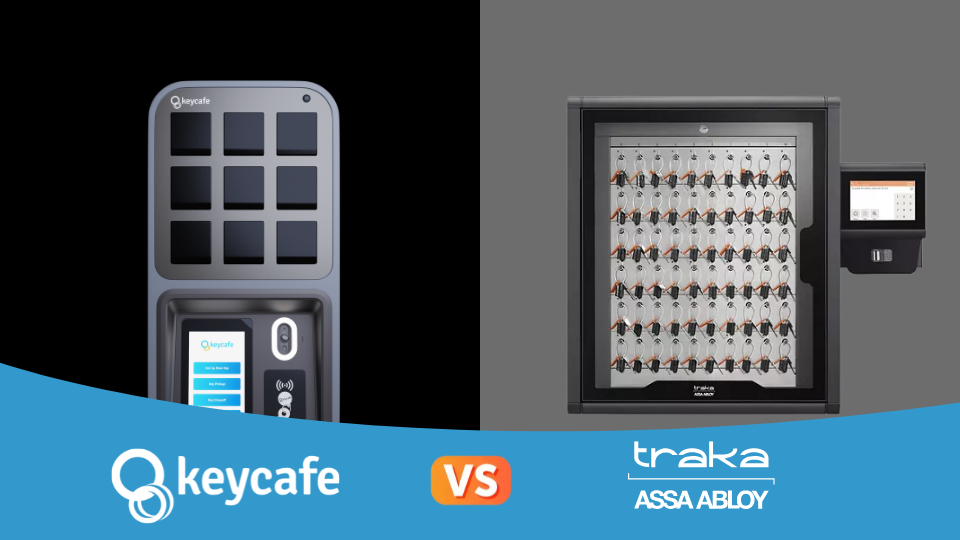
Two common options hoteliers evaluate are Keycafe and Traka. Both offer electronic key control and auditability, but they’re designed for very different operating environments. Below is a side-by-side comparison of Keycafe vs. Traka, rewritten specifically for the realities of hotel management, to help you determine which system best fits your property.
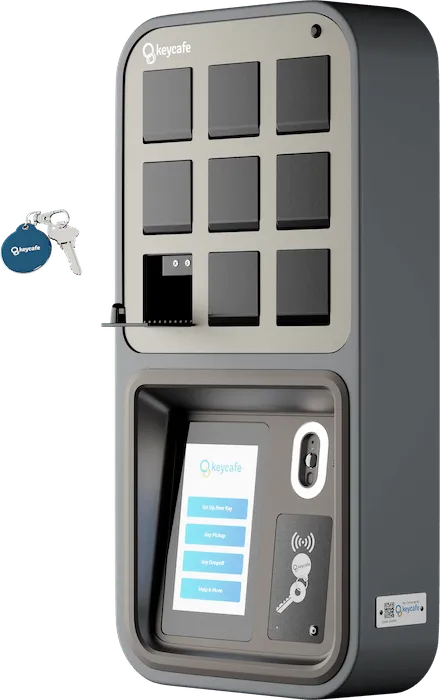
Keycafe is a modern, cloud-based platform built for simplicity and operational flexibility—two essentials for hotels managing rotating teams, around-the-clock shifts, and guest-facing service demands. Its modular SmartBox units feature individual, lockable key bins, allowing properties to deploy key storage exactly where it’s needed, whether at the front desk, housekeeping and maintenance offices, valet stations, or secure staff-only entrances.
Because the system is managed remotely through a web or mobile dashboard, hotel managers can control access permissions, monitor usage, and issue temporary access without being physically present. This flexibility is particularly valuable for multi-property hotel groups or properties operating 24/7.
Traka, by contrast, is built on a more traditional, centralized security model. It relies on proprietary iFobs attached to each key, which are docked into specific cabinet slots. While secure and proven, this approach typically requires a higher upfront hardware investment and closer involvement from IT teams. Traka is often chosen by large enterprises or properties with existing, robust security infrastructure.
For hotels, speed and accountability are equally important. Keycafe provides fully digital key tracking, logging every checkout, transfer, and return in real time. Each key is stored in its own locked bin, eliminating the need for staff to search through bundles of keys during busy check-in or housekeeping rushes.
A key operational advantage is Keycafe’s ability to support staff-to-staff key transfers. For example, a front desk agent can digitally transfer a master key to a maintenance technician, or housekeeping supervisor, without requiring either party to return to the cabinet. This reduces delays and keeps service teams moving efficiently across the property.
Traka also supports key transfers, but because keys must remain attached to iFobs and docked in designated slots, workflows are more structured and hardware-dependent. While this ensures accountability, it can be less fluid for hotels that rely on rapid, on-the-go access across multiple departments.
Hotels operate on strict shift schedules and role-based access requirements. Keycafe is purpose-built for agile workflows, allowing managers to set time-based access aligned with housekeeping, front desk, security, and maintenance shifts.
One standout feature for hotels is the ability to set a maximum number of keys per user. This prevents key hoarding, reduces the risk of misplaced master keys, and ensures that critical keys remain available during peak periods. Permissions, alerts, and access changes can all be managed from a mobile device—ideal for hotel managers who aren’t always at a desk.
Keycafe’s integrations extend beyond Zapier-based automation. For hotels using Mews PMS, Keycafe offers a direct integration that automates guest and staff access workflows. This allows hotels to sync reservations with key access rules, streamline guest key handover, and reduce manual front desk tasks. Combined with Zapier, Keycafe can connect with additional hotel systems such as task management or incident reporting platforms, helping centralize operational data and reduce administrative overhead.
Traka offers comparable scheduling and alerting capabilities, but they are typically managed through software designed for deep integration with enterprise IT and security systems. While powerful, this can make configuration and ongoing management more complex for hotel teams without dedicated IT staff on site.
Keycafe’s SmartBoxes are modular and wall-mounted, making them easy to install in both back-of-house and guest-facing areas. Built-in battery backup ensures continued operation during power outages—a critical consideration for hotels that must maintain access control at all times.
A major differentiator is Keycafe’s offline mode. Even if internet connectivity is lost, staff can continue accessing and returning keys without disruption. The system also includes a fail-safe retrieval method, ensuring keys can still be accessed in rare hardware failure scenarios—an important safeguard for guest safety and operations.
Traka systems also offer battery backup and limited offline functionality, allowing existing authorized users to continue accessing keys. However, they do not support generating new offline access on the fly, and their functionality is more tightly coupled to a stable, managed network environment. Additionally, Traka lacks a comparable fail-safe disassembly option for emergency access.
Budget predictability is essential for hotel operators. Keycafe uses a transparent, subscription-based pricing model with publicly available pricing. This allows hotel managers and ownership groups to forecast costs accurately without lengthy sales cycles.
Traka, in contrast, typically follows a quote-based pricing model. This often involves higher upfront hardware costs and variable software or maintenance fees that can increase as cabinets, users, or locations are added. While suitable for large enterprises, this model can make long-term cost planning more challenging for hotel groups.
For hotels, the choice between Keycafe and Traka comes down to operational agility versus centralized, IT-driven control. Traka is well suited to large enterprises with dedicated security teams and complex infrastructure requirements.
Keycafe, on the other hand, is purpose-built for hospitality environments that need speed, flexibility, and ease of use. With individual locked bins, cloud-based management, offline access, mobile controls, and transparent pricing, it aligns closely with the day-to-day realities of hotel operations.
For hotel managers looking to reduce key-related delays, improve accountability, and simplify access management across departments, Keycafe offers a practical, hotel-ready solution.
Want to see how Keycafe could work in your hotel? Join one of our upcoming hospitality-focused webinars to experience the platform firsthand and explore how it fits seamlessly into modern hotel workflows.
The main difference between Keycafe and Traka lies in flexibility and operational complexity. Keycafe is a cloud-based key management system designed for fast-moving hotel environments, offering mobile access, individual locked key bins, and remote management without heavy IT involvement. Traka, on the other hand, is a more traditional, hardware-centric system that relies on proprietary iFobs and centralized cabinets, typically requiring deeper IT integration and higher upfront investment. For hotels prioritizing ease of use and agility, Keycafe is often the better fit.
For most hotels, Keycafe is better suited to daily staff workflows. Keycafe allows hotel managers to set time-based access for shifts, limit the number of keys per user, and quickly reassign keys between departments like housekeeping, maintenance, and front desk. These features help prevent key bottlenecks and reduce operational delays. While Traka supports scheduled access, its workflows are more rigid and typically optimized for enterprise security environments rather than hospitality’s frequent shift changes.
Yes, Keycafe integrates directly with Mews PMS, enabling hotels to automate guest and staff access based on reservations and operational rules. This reduces manual key handling at the front desk and streamlines check-in and check-out processes. Keycafe also supports additional integrations via Zapier for broader hotel tech stacks. Traka does not offer native PMS integrations like Mews, and integrations typically require custom IT work, making automation more complex for hotel teams.
Keycafe is generally more cost-effective and predictable for hotels. It offers transparent, publicly available pricing with a monthly software fee per location, regardless of how many expansion units are added. This makes it easier for hotels to scale as they add rooms or services. Traka typically uses a quote-based pricing model, which can involve higher upfront hardware costs and variable software or maintenance fees, making long-term budgeting more difficult for hotel operators.
.webp)
.webp)

